
The muscle crisis GLP-1 creates
Updated: Apr 9
Here is the clinical reality that most GLP-1 conversations skip entirely.
Researchers at UC Davis note that some of this lean mass loss comes from the liver rather than skeletal muscle specifically. Skeletal muscle loss of around 20% is comparable to other forms of calorie restriction. But their conclusion remains the same: it is still critically important to protect muscle through exercise and high-quality protein.
Muscle is not just tissue you use to lift things. It is your primary metabolic organ. It is where the majority of glucose is processed after meals. It determines your resting metabolic rate — the number of calories your body burns just to keep you alive.
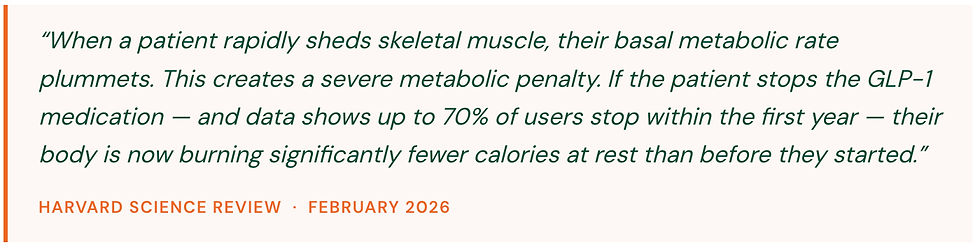
This is the mechanism behind the weight regain that affects 75–90% of GLP-1 drug users. The drug never repaired the underlying system. It overrode it. When the override stops, everything that was broken reasserts itself — now with less muscle and a slower metabolism than before.
Why muscle loss hits women over 40 harder
This is not just a general problem made worse by GLP-1 drugs. For women over 40, it is a crisis layered on top of a crisis that was already underway.
There is a condition called sarcopenia — the progressive, age-related loss of skeletal muscle mass and strength. It begins subtly in our 30s and accelerates significantly after 40, particularly as women move through perimenopause and menopause.
Estrogen plays a critical role in supporting muscle protein synthesis — the process by which your body builds and repairs muscle tissue. As estrogen declines, so does the efficiency of this pathway. Add chronic cortisol — often elevated in high-performing women over 40 — and you have a dual hormonal environment actively working against muscle retention.
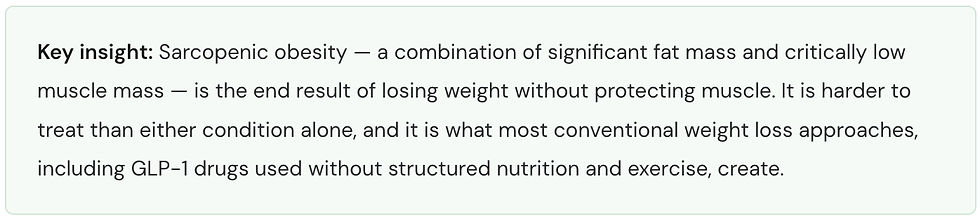
And to be clear: this is not only a conversation for women on GLP-1 medications. Every woman over 40 who has lost weight through restriction, low-calorie approaches, or excessive cardio without protecting her muscle is at risk. The drug simply accelerates what was already happening.
The protein truth — how much, what kind, and when
The old protein recommendation of 0.8 grams per kilogram of body weight was designed for sedentary young adults to prevent deficiency. It was never designed for muscle preservation in midlife women undergoing weight loss.
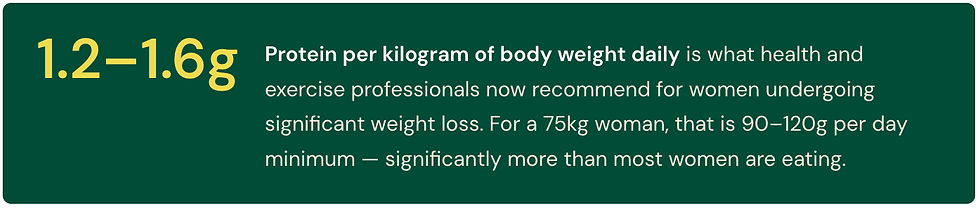
And it is not just about how much. It is when. Research published in 2025 found that distributing protein evenly across three meals — approximately 25–30 grams at breakfast, lunch, and dinner — increased muscle protein synthesis by 25% compared with skewed intake patterns where protein is concentrated at dinner.
Best plant-based protein sources for muscle preservation
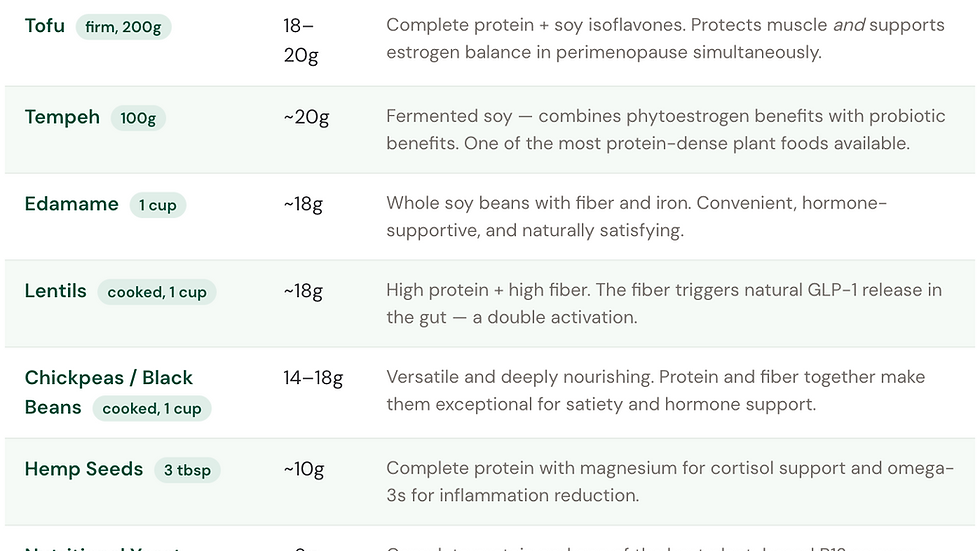
The key is distribution. Eat protein at breakfast, lunch, and dinner. Aim for 25–30 grams at each meal. Do not save it all for dinner — your body can only effectively utilize around 30–40g for muscle protein synthesis per meal.
Intuitive Movement — strength as medicine, not punishment
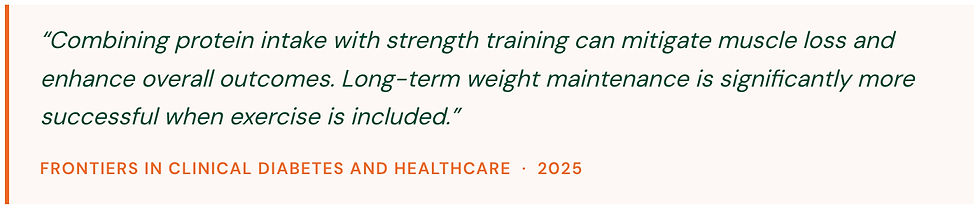
Protein without resistance training is like having all the building materials for a house and no architect. The research is clear: combining adequate protein with structured strength work is the only evidence-based intervention that simultaneously reduces fat and builds or preserves muscle.
I teach strength and movement inside through the lens of Intuitive Movement — not punishment, not boot camps, not 90-minute workouts that leave you exhausted and guilty. Movement should be something your body recognizes as support, not stress. Here is how the program structures this month by month:
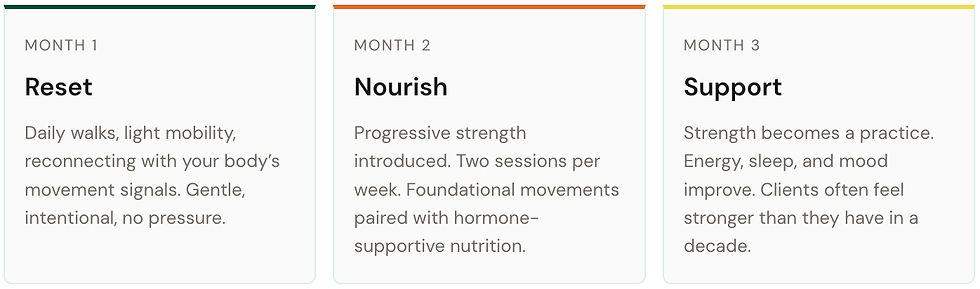
Two strength sessions per week is all it takes to begin. Focus on multi-joint movements — squats, hip hinges, pressing, pulling — that stimulate the largest muscle groups, burn the most glucose, and have the greatest impact on resting metabolic rate.
The Intuitive Nourishment approach to protein and strength
The goal is not to optimize your body like a machine. The goal is to nourish it like the living, intelligent, hormonal system it is. Macro tracking and obsessive monitoring can elevate cortisol levels — which directly suppresses natural GLP-1 production and undermines the improvements we are trying to create.
Intuitive Nourishment for muscle and strength comes down to four daily practices:
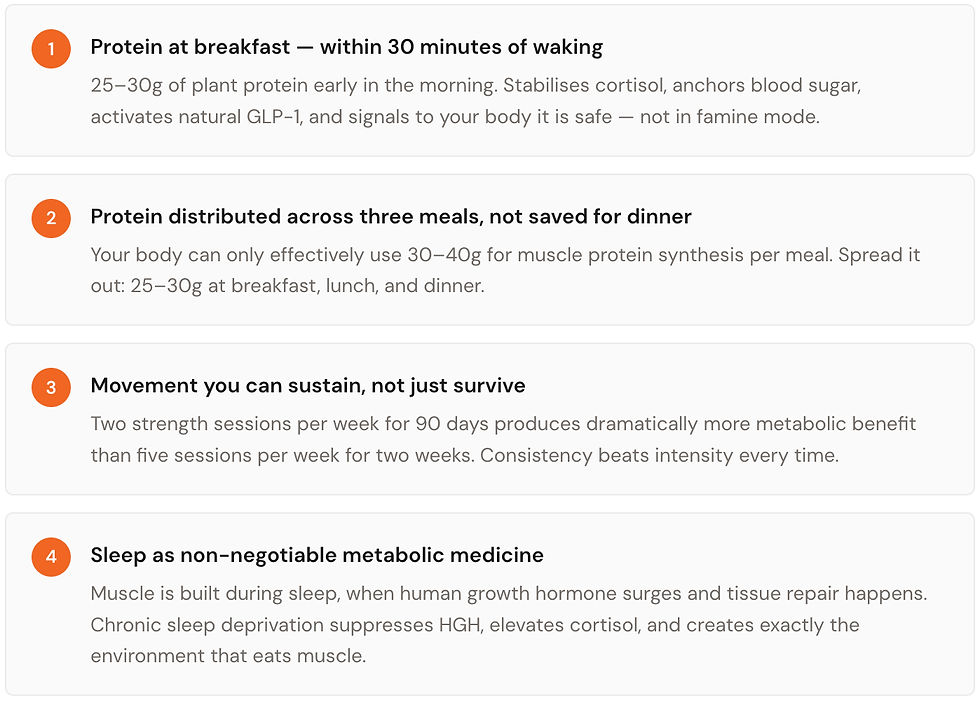
These practices are not hard. They are not glamorous. But they are the things that change everything.
Conclusion: Embracing a Holistic Approach to Wellness
As we navigate the complexities of weight loss and muscle preservation, it’s essential to adopt a holistic approach. This means understanding the interplay between nutrition, movement, and hormonal health. By focusing on nourishing our bodies and engaging in intuitive movement, we can create a sustainable path to wellness.
Remember, it’s not just about losing weight; it’s about feeling vibrant and alive. Embrace the journey and give yourself the grace to evolve.



Comments